

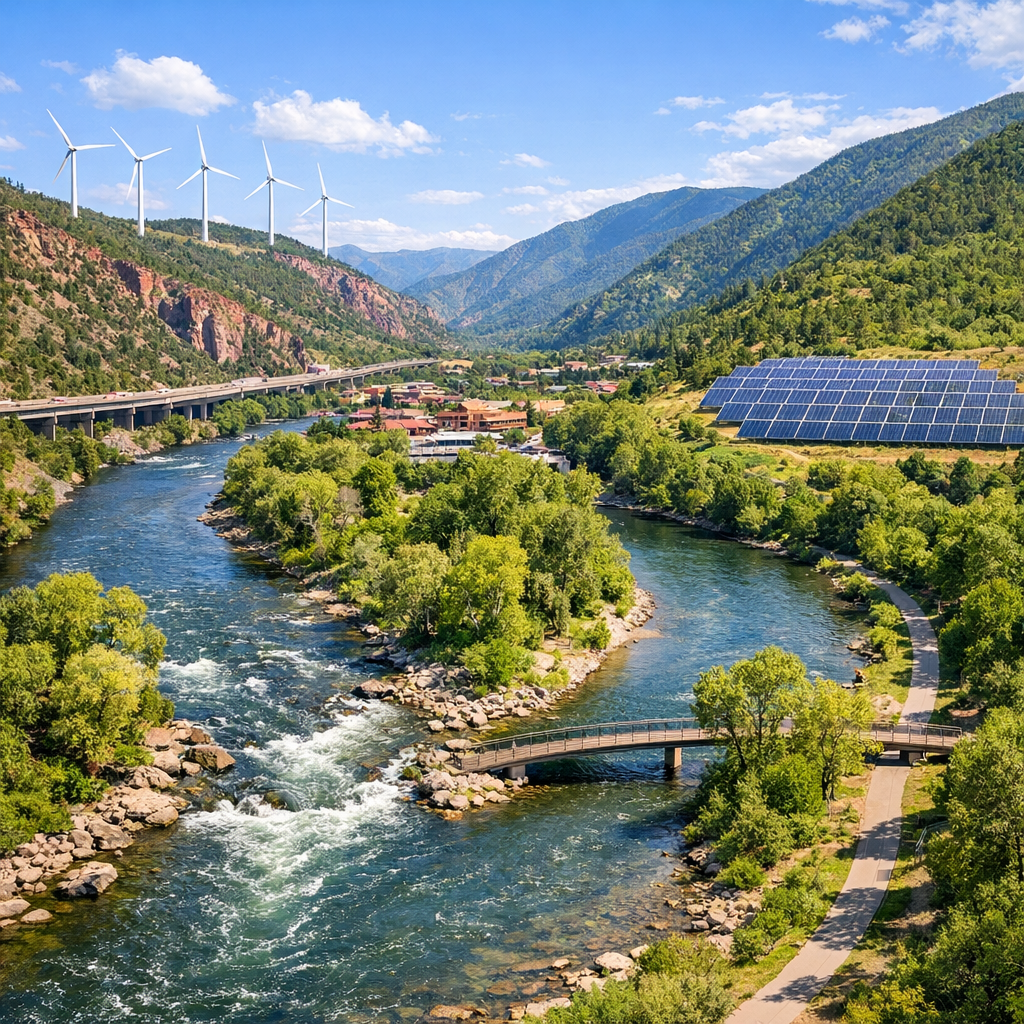
Glenwood Springs, nestled at the confluence of the Colorado and Roaring Fork rivers, has long been a beacon of environmental stewardship. The city’s dedication to sustainability is evident in its comprehensive initiatives aimed at preserving natural resources and promoting eco-friendly practices.
Renewable Energy Initiatives
In June 2019, Glenwood Springs achieved a significant milestone by transitioning to 100% renewable electricity. This accomplishment made it the seventh city in the nation, and the second in Colorado, to power all municipal operations with renewable energy sources, including wind, hydroelectric, and solar power. This shift underscores the city’s commitment to reducing its carbon footprint and promoting sustainable energy solutions.
River Restoration Efforts
The health of the Colorado and Roaring Fork rivers is vital to the community’s well-being and economy. Recognizing this, Glenwood Springs has undertaken several river restoration projects. The Three Mile Shoreline Restoration Project, completed in 2024, focused on revegetating approximately 30,000 square feet of riparian and wetland habitat, removing invasive species, and stabilizing 700 linear feet of eroded riverbank. These efforts aim to enhance the ecological integrity of the riverbanks and improve recreational spaces for residents and visitors.
Community Engagement and Environmental Stewardship
Community involvement plays a crucial role in Glenwood Springs’ environmental initiatives. The annual RiverFEST, now in its 23rd year, brings together volunteers to clean up the Roaring Fork and Colorado rivers. Participants engage in activities such as removing debris from the riverbanks and waterways, fostering a sense of community and shared responsibility for the local environment.
Comprehensive Sustainability Planning
To guide its sustainability efforts, Glenwood Springs adopted the Energy and Climate Action Plan (ECAP) in 2024. The plan outlines strategies to achieve a 60% reduction in emissions from municipal operations by 2035, compared to 2022 levels. It focuses on five key areas: energy supply, buildings, waste management, transportation, and parks and natural systems. The ECAP serves as a roadmap for the city to implement effective and impactful sustainability measures.
Through these initiatives, Glenwood Springs exemplifies a proactive approach to environmental sustainability, balancing ecological preservation with community development and engagement.