

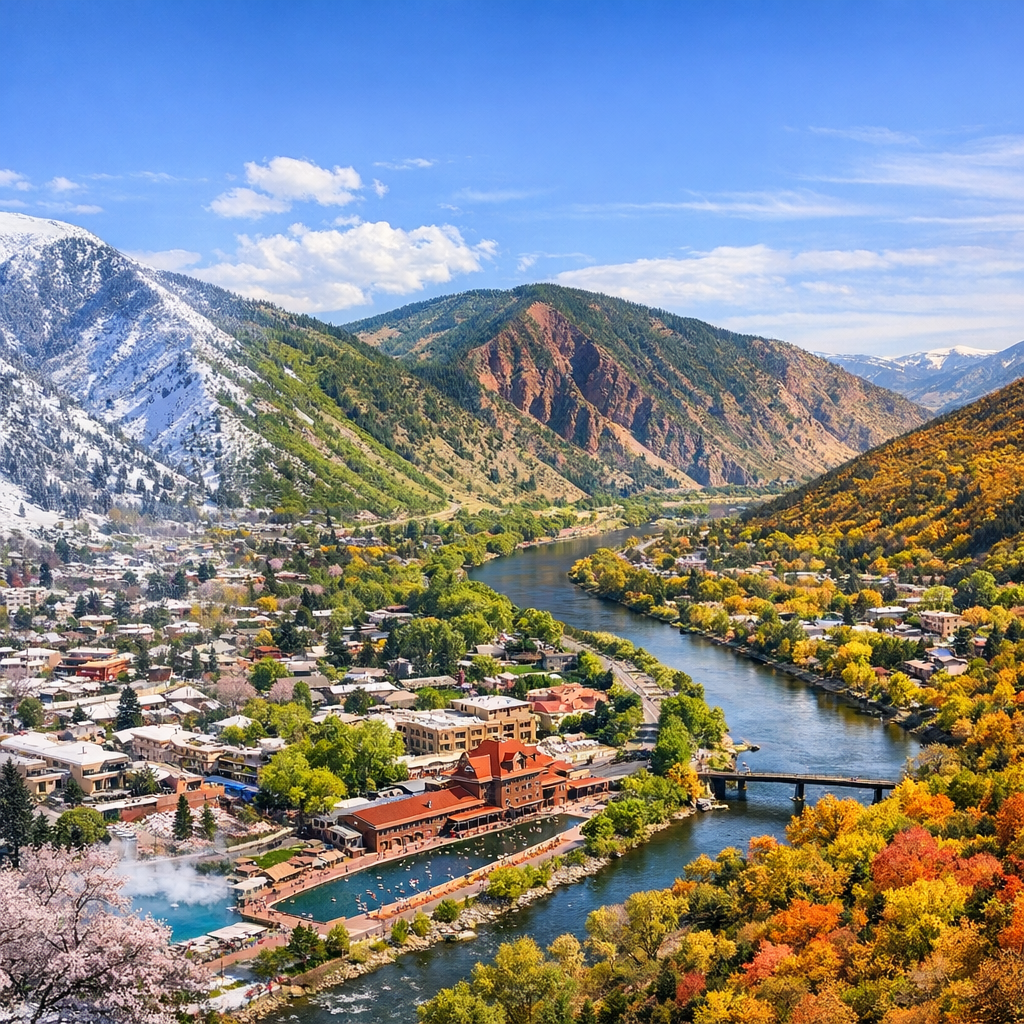
Glenwood Springs, nestled in the heart of Colorado’s Rocky Mountains, boasts a diverse climate that offers distinct experiences throughout the year. Understanding these seasonal patterns can help residents and visitors make the most of what this beautiful region has to offer.
Spring: A Time of Renewal
Spring in Glenwood Springs brings mild temperatures, with average highs ranging from 60°F to 70°F (15.5°C to 21°C). This season is characterized by blooming flora and increased daylight, making it ideal for outdoor activities such as hiking and biking. However, spring can also bring occasional rain showers, so it’s wise to be prepared for variable weather conditions.
Summer: Warm and Inviting
Summers are typically warm and dry, with average high temperatures between 75°F and 90°F (24°C to 32°C). The low humidity and abundant sunshine create perfect conditions for exploring the area’s natural attractions, including the renowned hot springs and numerous hiking trails. Evening temperatures cool off, providing a comfortable respite from the daytime heat.
Fall: Crisp and Colorful
Autumn in Glenwood Springs is marked by cooler temperatures, with average highs ranging from 65°F to 70°F (18°C to 21°C). The changing foliage paints the landscape in vibrant hues, offering picturesque views and excellent opportunities for photography and leisurely walks. Fall is also a time of reduced tourist activity, allowing for a more tranquil experience.
Winter: Mild with Snowy Delights
Winters are relatively mild compared to other mountainous regions, with average high temperatures between 30°F and 45°F (-1°C to 7°C). The area receives moderate to heavy snowfall, averaging around 67 inches (170 cm) annually, making it a haven for winter sports enthusiasts. Despite the snow, many days are sunny, contributing to the region’s reputation for pleasant winter weather.
Annual Precipitation and Climate Classification
Glenwood Springs receives an average annual precipitation of approximately 18 inches (46 cm), contributing to its alpine climate with low humidity. The Köppen climate classification identifies the area as Dfb, indicating a humid continental climate with mild summers and wet conditions throughout the year. This classification reflects the region’s significant seasonal variations and diverse weather patterns.
Understanding the unique climate of Glenwood Springs allows residents and visitors to plan activities that align with the seasonal offerings, ensuring a rewarding experience in this picturesque Colorado town.